
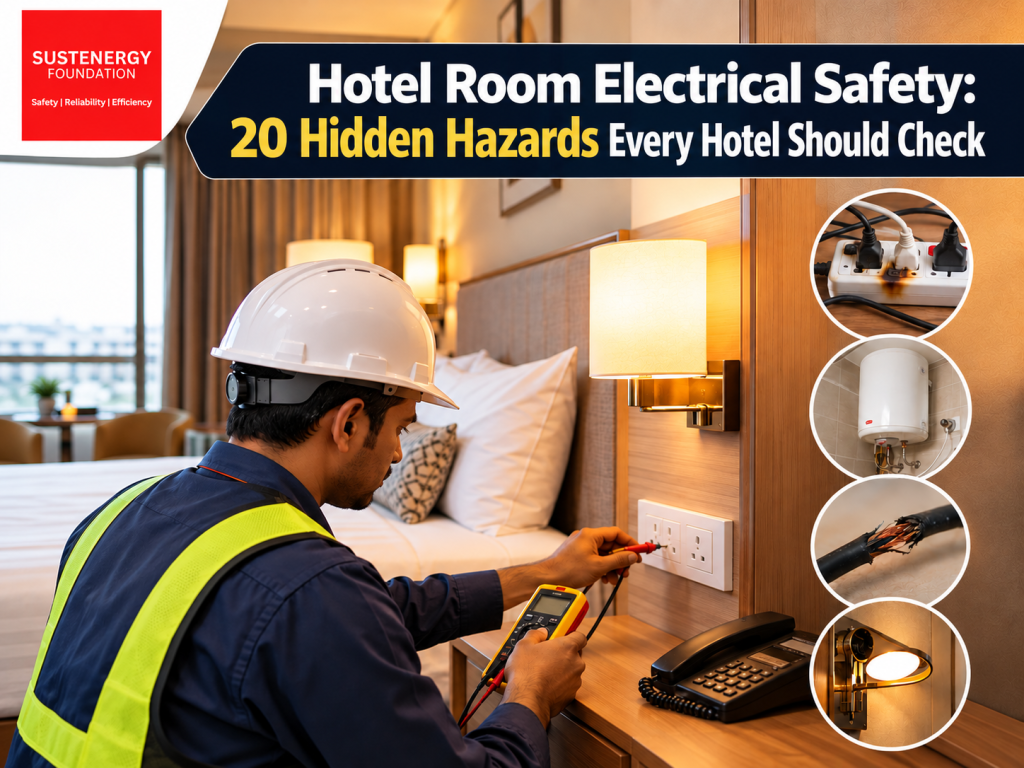
A comfortable hotel room should offer guests more than a pleasant bed, good lighting and reliable air conditioning. It should also provide something they may never think about during their stay: electrical safety.
From charging mobile phones beside the bed to using a hair dryer in the bathroom, guests interact with electrical equipment throughout their stay. Behind the scenes, refrigerators, air conditioners, water heaters, lighting systems and other appliances operate for long hours, often under continuous demand.
Over time, loose connections, damaged cables, deteriorating insulation and poorly maintained equipment can create hidden electrical hazards. These problems may go unnoticed during routine housekeeping, yet they can increase the risk of electric shock, electrical fires, equipment failure and unexpected interruptions to hotel operations.
For hotel owners, facility managers and engineering teams, identifying these risks early is an essential part of guest protection and property maintenance.
A hotel electrical safety audit helps uncover potential hazards, evaluate the condition of electrical installations and identify corrective actions before minor defects develop into serious problems.
Here are 20 hidden electrical hazards every hotel should check.
20 Hidden Electrical Hazards in Hotel Rooms
1. Loose or Damaged Electrical Sockets
Electrical sockets are used every day by guests to charge phones, connect laptops and operate personal appliances. Frequent use, physical damage or loose internal connections can cause overheating and electrical arcing.
During a hotel room electrical safety inspection, check for cracked socket plates, loose mounting, discolouration, burning marks and unusual heat. Any damaged outlet should be taken out of service until it has been inspected and repaired by a qualified electrician.
2. Overloaded Extension Boards
Guests sometimes connect several devices to a single extension board, particularly when the room has limited charging points. Housekeeping and maintenance teams may also use temporary extensions for cleaning equipment.
Overloading can cause excessive heating, especially when extension boards are damaged, coiled or used beyond their rated capacity.
Hotels should provide an adequate number of properly rated outlets, discourage unsafe multi-plug adaptors and ensure that temporary electrical connections are used appropriately.
3. Frayed or Damaged Power Cords
Power cords connected to kettles, hair dryers, lamps and other appliances can deteriorate through regular use, bending, crushing or improper handling.
Damaged insulation may expose live conductors and create an electric shock or fire hazard.
Check appliance cords during routine maintenance and replace defective cables or equipment. Taping over damaged insulation should not be treated as a permanent repair.
4. Missing or Ineffective Earthing
Protective earthing is a fundamental part of electrical safety. If an insulation fault occurs in an appliance with exposed metal parts, an effective earthing system helps provide a path for fault current so that the appropriate protective device can operate.
During an electrical safety inspection in hotels, verify earth continuity at relevant socket outlets and fixed equipment using suitable test instruments.
Do not rely on the physical appearance of a socket to determine whether its earthing connection is effective.
5. Defective RCCBs and RCDs
Residual Current Circuit Breakers (RCCBs) and Residual Current Devices (RCDs) provide additional protection against certain electric shock hazards by detecting residual current.
However, simply installing an RCCB does not guarantee protection. A defective device, incorrect installation or unsuitable protection arrangement may leave occupants exposed to risk.
Hotel engineering teams should verify the presence, suitability and operation of protective devices according to applicable requirements and manufacturer instructions. Instrument-based testing should be carried out by competent personnel where required.
6. Unsafe Bathroom Water Heaters
Water heaters deserve special attention because electricity and moisture can create a particularly dangerous combination.
Damaged wiring, loose terminals, defective isolators, insulation failure or ineffective earthing can increase the risk of electric shock and fire.
Inspect instantaneous and storage water heaters, their dedicated circuits, protective devices, isolators and electrical connections. Also check for signs of water leakage that could affect electrical components.
Bathroom electrical safety should be an essential part of every hotel maintenance programme.
7. Electrical Equipment Too Close to Water
Hair dryers, shaver outlets and other electrical accessories may be used near washbasins, bathtubs and showers.
Equipment installed in unsuitable locations or without appropriate protection can create a serious hazard, particularly when wet hands or damp surfaces are involved.
Check the placement and suitability of electrical accessories against the applicable requirements for bathroom zones. Verify that the equipment and its protective arrangements are appropriate for the environment.
Guests should also be advised not to use damaged electrical appliances or operate equipment in unsafe wet conditions.
8. Damaged Bathroom Exhaust Fans
Bathroom exhaust fans operate in environments where moisture and condensation can accelerate deterioration.
Loose connections, damaged insulation, defective switches and moisture ingress may lead to equipment failure or electrical shock.
Inspect the fan housing, wiring, isolating arrangements and associated controls. Replace defective components and investigate repeated tripping or unusual operating noise instead of treating these symptoms as routine maintenance issues.
9. Loose or Overheated Switches
A switch that sparks, buzzes, smells burnt or feels unusually warm may indicate loose connections, internal damage or component deterioration.
These warning signs should never be ignored, even if the light or appliance continues to operate normally.
Hotel maintenance staff should report affected switches immediately and arrange an inspection by qualified personnel. Replacing the switch without investigating the underlying cause may allow the same problem to return.
10. Concealed Junction Boxes and Hidden Wiring Defects
Electrical wiring concealed behind furniture, wall panels and false ceilings can make faults difficult to identify.
Loose connections, damaged insulation and poorly executed modifications may remain unnoticed until they cause overheating, a short circuit or equipment failure.
Ensure that junction boxes are suitably enclosed and accessible for inspection and maintenance. Electrical modifications should be documented, and concealed wiring should be installed and maintained in accordance with applicable standards.
11. Poorly Maintained Mini-Bar Refrigerators
Mini-bar refrigerators operate for extended periods, sometimes continuously throughout the year.
Damaged plugs, loose socket connections, faulty compressors and restricted ventilation can contribute to overheating and premature equipment failure.
During hotel room maintenance, inspect the refrigerator’s plug, socket, power cord, ventilation clearance and general condition. Ensure that the appliance is connected to a suitable supply and that any unusual heat, smell or noise is investigated.
12. Air-Conditioner Electrical Faults
Room air-conditioning systems are among the most frequently used electrical loads in hotels. Continuous operation, vibration, dust accumulation and ageing components can contribute to electrical deterioration.
Loose terminals, damaged insulation, unsuitable protective devices and poorly maintained isolators can increase the risk of overheating and unexpected breakdowns.
Include air-conditioner supply circuits, isolators, electrical connections and associated protective devices in the hotel’s preventive maintenance schedule.
A professional hotel electrical safety audit can also help identify developing problems in associated electrical distribution systems.
13. Defective Bedside Reading Lights
Bedside lights are convenient for guests, but damaged lamp holders, loose connections and deteriorated flexible cables can create hidden electrical risks.
Metallic fittings may also become hazardous if insulation fails and the required protective earthing is absent or ineffective.
Inspect the complete fitting, including switches, lamp holders, cables and mounting arrangements. Pay particular attention to lights installed close to upholstered headboards, curtains and other combustible materials.
14. Unsafe Decorative and LED Lighting
Decorative lighting, concealed LED strips and illuminated furniture can improve the appearance of a hotel room. However, poorly installed lighting systems may conceal defective wiring, unsuitable drivers or inadequate ventilation.
Temporary festive lights and unauthorised modifications can introduce additional risks.
Verify that lighting equipment is appropriately rated, securely installed and supplied through suitable electrical protection. Check LED drivers and concealed components for overheating or deterioration, and remove unsafe temporary installations.
15. Incorrectly Rated Circuit Breakers
Circuit breakers protect electrical circuits against specified overcurrent conditions. If a protective device is oversized or unsuitable for the connected cable and circuit design, the wiring may not receive adequate protection.
During an electrical safety inspection, verify that the protective device ratings and characteristics are appropriate for the conductors, connected loads, fault conditions and circuit requirements.
Never increase a breaker rating simply because it trips repeatedly. The underlying cause must first be identified and corrected.
16. Loose Connections Inside Distribution Boards
Some of the most serious electrical defects are hidden inside distribution boards and electrical panels rather than within the guest room itself.
Loose terminals, deteriorated insulation, poor contact and unbalanced or excessive loading can generate abnormal heat. In severe cases, these conditions may contribute to equipment failure or electrical fires.
Qualified electrical personnel should inspect distribution boards using appropriate procedures and safe working practices. Thermographic inspection can help identify abnormal temperature patterns under suitable operating conditions.
Any identified defect should be investigated, repaired and documented.
17. Unsafe Electrical Maintenance Practices
Electrical safety depends not only on equipment condition but also on how maintenance work is carried out.
If a circuit is being repaired without proper isolation, another employee could inadvertently restore the power supply while work is in progress.
Hotels should implement suitable lockout/tagout (LOTO) procedures, verify isolation before work begins and communicate clearly with all relevant personnel.
Only competent and authorised individuals should carry out electrical repairs. Housekeeping staff should never attempt to repair exposed wiring, defective sockets or electrical appliances.
18. Unsafe Guest Charging Points
Mobile phones, laptops, tablets and other personal devices are commonly charged beside hotel beds and work desks.
Damaged chargers, poor-quality adaptors, loose sockets and overloaded outlets can create avoidable risks. Charging devices beneath pillows or bedding may also restrict heat dissipation.
Hotels should provide sufficient, correctly rated charging points and maintain them in good condition. Guest information can encourage safe charging practices without unnecessarily complicating the guest experience.
19. Inadequate Emergency Lighting
A power failure can leave guests unfamiliar with the building unable to locate corridors, staircases and exits safely.
Emergency lighting and exit signs are therefore important elements of hotel electrical safety and emergency preparedness.
Inspect emergency luminaires, battery backup arrangements, exit signs and associated electrical supplies. Conduct functional and duration tests according to the applicable requirements and manufacturer instructions.
Document test results and ensure that defective equipment is repaired promptly.
20. Missing Electrical Inspection and Maintenance Records
An electrical installation may appear to be in good condition while previous defects remain unresolved or important safety tests have not been completed.
Without reliable records, hotel management may struggle to identify recurring faults, track corrective actions or demonstrate that maintenance has been carried out.
Maintain room-wise electrical inspection checklists, testing results, defect registers, repair records and closure evidence.
A structured documentation system helps hotel engineering teams prioritise risks, plan maintenance and monitor the effectiveness of their electrical safety programme.
How Can Hotels Improve Electrical Safety?
Identifying individual hazards is only the first step. Hotels need a systematic approach to electrical risk assessment, preventive maintenance and corrective action.
The following practices can help improve electrical safety across guest rooms and the wider property.
1. Conduct periodic hotel electrical safety audits
Arrange inspections by competent electrical safety professionals to evaluate guest rooms, bathrooms, distribution boards, kitchens, laundry areas, plant rooms and other relevant facilities.
The audit scope should be tailored to the property’s electrical installation, operational risks and applicable requirements.
2. Carry out appropriate electrical testing
Visual inspection alone cannot identify every hidden defect. Depending on the installation and audit scope, testing may include earth continuity, earth fault loop impedance, insulation resistance and RCCB/RCD performance.
Thermal imaging can also help identify abnormal heating in electrical panels, terminals and other suitable equipment.
3. Follow applicable Indian standards and regulations
Electrical installations should be inspected and maintained in accordance with applicable Central Electricity Authority safety regulations, relevant BIS standards, the National Electrical Code of India and applicable building and fire safety requirements.
The specific requirements depend on the installation and the work being performed. Hotels should use the applicable editions and amendments rather than relying on outdated references.
4. Train housekeeping and maintenance teams
Staff members who regularly enter guest rooms are often among the first to notice damaged sockets, burning smells, sparking switches and other warning signs.
Provide clear instructions on how to report hazards, restrict access to unsafe equipment and escalate urgent issues. Staff should not attempt repairs beyond their competence or authorisation.
5. Maintain a room-wise defect register
Record each observation with the room or equipment reference, risk level, recommended corrective action, responsible person and closure status.
Critical hazards should be isolated or otherwise controlled promptly, with repairs completed before the affected equipment is returned to service.
6. Include electrical safety in pre-opening inspections
New hotels and renovated properties should undergo appropriate electrical inspections and testing before guest occupancy. This helps identify installation defects, incomplete work and unsafe modifications before they affect hotel operations.
A pre-opening electrical inspection can be especially valuable after major refurbishment, changes to room layouts or upgrades to electrical systems.
7. Review safety performance regularly
Hotel management should periodically review inspection findings, recurring defects, overdue corrective actions and maintenance trends.
This turns electrical safety from an occasional activity into a continuous process of risk reduction and operational improvement.
Why Is a Professional Hotel Electrical Safety Audit Important?
A professional hotel electrical safety audit provides a structured assessment of electrical installations and helps identify issues that may not be obvious during routine maintenance.
Depending on the agreed scope, an audit may include:
- Guest room electrical safety inspection.
- Socket outlet, switch and fixed-appliance checks.
- Earthing effectiveness and protective device testing.
- Distribution board inspection and thermal imaging.
- Insulation resistance and earth fault loop impedance testing, where applicable.
- Emergency power and backup system checks.
- Review of maintenance documentation and previous observations.
- Risk-based recommendations and corrective action tracking.
For hotel owners and facility managers, these findings support better maintenance planning, improved electrical reliability and a more proactive approach to guest safety.
Sustenergy Foundation provides specialised electrical safety audit services for hotels and resorts, along with energy audit and related electrical inspection services. Its hospitality-focused approach helps properties identify potential hazards and improve the safety, reliability and performance of their electrical infrastructure.
Conclusion: Make Hotel Room Electrical Safety a Priority
Electrical hazards do not always announce themselves. A loose socket, deteriorating cable or defective protective device may remain unnoticed until it contributes to an incident.
That is why hotel room electrical safety should never depend solely on whether the lights work or the appliances appear normal. Regular inspections, suitable electrical testing, competent maintenance and proper documentation are essential to identifying hidden risks.
For hotel owners, general managers and engineering teams, the goal is straightforward: identify hazards early, correct defects promptly and maintain a safe environment throughout the property.
A comfortable hotel room is important. A safe hotel room is essential.
Make electrical safety a regular part of your hotel’s maintenance strategy, and consider a professional hotel electrical safety audit to help protect your guests, employees, property and reputation.
