
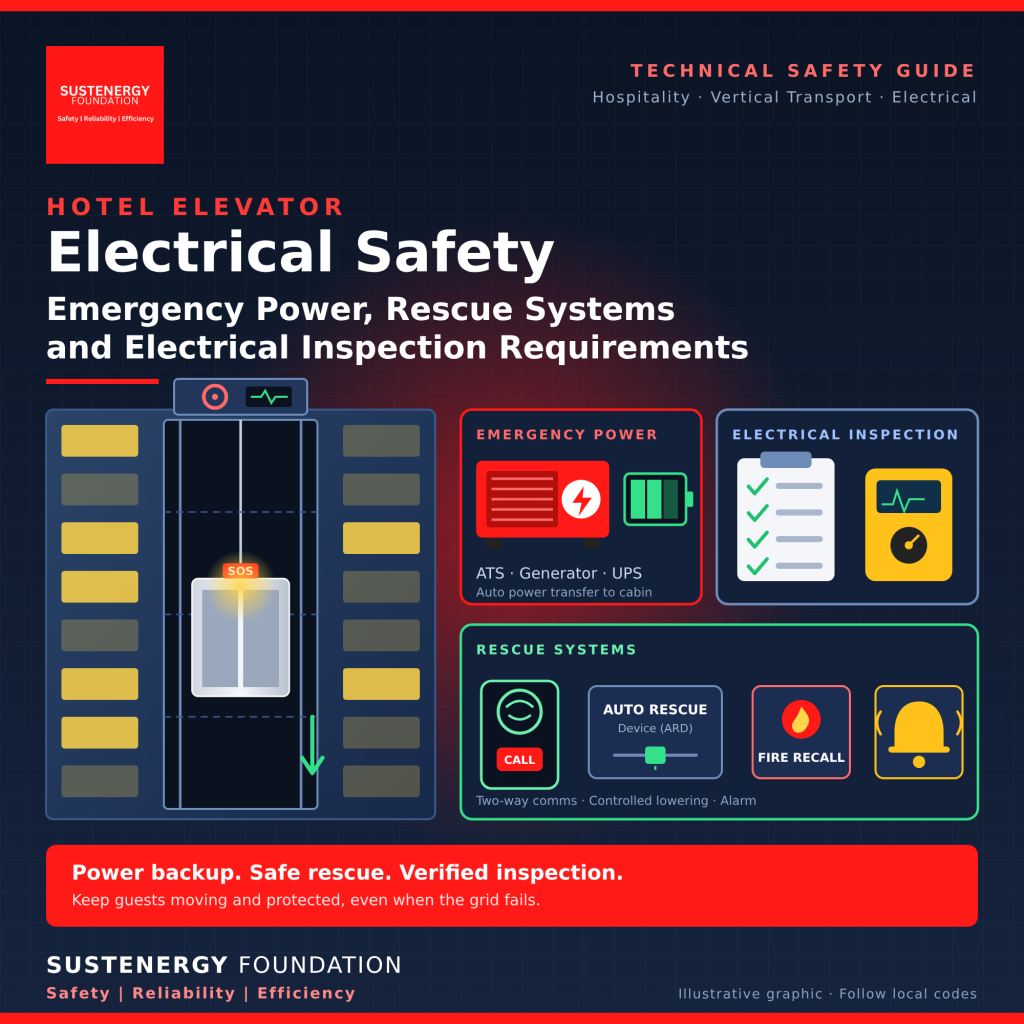
Hotel elevator electrical safety is a core part of guest protection and uninterrupted hotel operations. Supported by specialists in Sustenergy Foundation, this guide covers emergency power, automatic rescue devices (ARD) and lift electrical inspection requirements for hotels in India.
1. Emergency Power: Keeping Elevators Safe During Power Failure
Hotels depend on elevators throughout the day and night. A sudden interruption in the utility supply can leave guests trapped between floors, particularly during peak occupancy. A reliable elevator emergency power system is therefore essential.
Hotels should evaluate the following:
- DG generator backup: Ensure the standby generator has adequate capacity to support the designated elevators and other essential building services.
- Automatic changeover: Verify that the automatic mains failure (AMF) panel and associated changeover system transfer the required supply safely and reliably.
- Electrical protection: Check phase failure, phase reversal, under-voltage and overcurrent protection, along with the integrity of the incoming supply.
- Emergency lighting: Ensure that emergency lighting inside the elevator remains operational during a power interruption.
- Emergency communication: Verify that the alarm bell and intercom remain functional when the normal power supply fails.
Importantly, emergency generator operation does not necessarily mean every elevator should continue normal passenger service. The emergency operating sequence must be designed, tested and understood by the facility management team.
2. Passenger Rescue Systems: What Happens When Someone Is Trapped?
One of the most important safety features in a modern elevator is the Automatic Rescue Device (ARD). When the main power supply fails, a battery-operated ARD can move the elevator to the nearest suitable landing and release passengers, subject to the system’s design and safety conditions.
Key inspection points include:
- Verify that the ARD operates during mains failure.
- Check battery condition, charging voltage and backup capacity.
- Confirm that the system responds to phase failure and other specified supply abnormalities.
- Verify that the elevator stops accurately at the landing and opens its doors as designed.
- Check the audio-visual indication inside the car during rescue operation.
- Ensure emergency lighting remains available until the rescue operation is completed.
IS 17900 (Part 1):2022 specifies important ARD requirements, including battery capacity for at least three consecutive rescue operations under the specified conditions. Where an approved alternate supply, such as a generator or UPS, is provided with automatic changeover, the standard permits ARD to be optional under the specified conditions. The actual arrangement must be verified against the applicable standard and lift design.
Hotels must also establish an elevator passenger rescue procedure. Reception, security and engineering personnel should know whom to contact, how to communicate with trapped passengers and how to arrange assistance.
Never allow untrained hotel staff to force open elevator doors or attempt passenger rescue. Rescue must be performed by trained and authorised personnel following the manufacturer’s procedure.
3. Electrical Inspection: Beyond Routine Lift Maintenance
Elevator maintenance and electrical safety inspection are related but different responsibilities. A hotel should ensure that periodic lift electrical inspection covers the complete electrical installation and associated safety systems. Many hotels combine this with a wider hotel electrical safety audit to catch hazards across the property.
Incoming power supply
- Supply voltage and phase condition.
- Main isolator and circuit-breaker condition.
- Cable terminations and overheating.
- Phase failure and phase reversal protection.
Earthing and electrical protection
- Protective earthing continuity.
- Earthing connections of the lift machine, controller and metallic enclosures.
- Insulation condition of electrical wiring.
- Correct functioning of protective devices and safety circuits.
Control and safety systems
- Door interlocks and electrical safety contacts.
- Emergency stop switches.
- Limit switches and other protective devices.
- Alarm, intercom and emergency lighting.
- ARD and generator changeover operation.
Inspection and testing should be undertaken by competent, authorised professionals using suitable calibrated instruments. Any unsafe defect must be rectified before the elevator is returned to normal service.
4. Statutory Compliance and Documentation
Hotel management should maintain valid lift licences, inspection records, maintenance reports, breakdown history and test certificates.
In India, IS 17900 (Part 1):2022 provides the relevant safety rules for lifts. Applicable state lift legislation and local authority requirements must also be followed. For example, the Kerala Lifts and Escalators Act and Rules include requirements relating to lift permission, licensing and inspection.
5. Make Elevator Safety a Management Priority
Elevator safety should never be treated as the responsibility of the lift maintenance contractor alone. Hotel engineering teams should periodically conduct emergency power failure simulations, verify rescue arrangements, review electrical inspection reports and train security and reception personnel.
A reliable backup supply also supports a hotel’s wider energy strategy. To explore efficient and dependable power options, visit Sustenergy Foundation.
A well-maintained elevator protects passengers, supports uninterrupted hotel operations and strengthens guest confidence.
Remember: An elevator is safe not merely because it moves smoothly every day, but because its emergency systems are ready when something goes wrong.
Need guidance on hotel electrical safety, backup power or energy efficiency? Explore the resources from Sustenergy Foundation, a sustainable energy solution organization.
