
Practical Electrical Safety Guidance for Hotel Facility Teams, Chief Engineers & Maintenance Managers
A hotel is supposed to be a place where guests feel safe.
Behind that sense of comfort, however, is a complex network of electrical systems working 24/7—power distribution panels, transformers, generators, UPS systems, air-conditioning equipment, kitchen appliances, laundry machinery, water heaters, lighting systems and hundreds of smaller electrical loads.
When everything works normally, these systems are easy to take for granted.
But when an electrical fault occurs, the difference between a minor incident and a major hotel fire can come down to maintenance, protection systems, fire preparedness and the ability to evacuate safely.
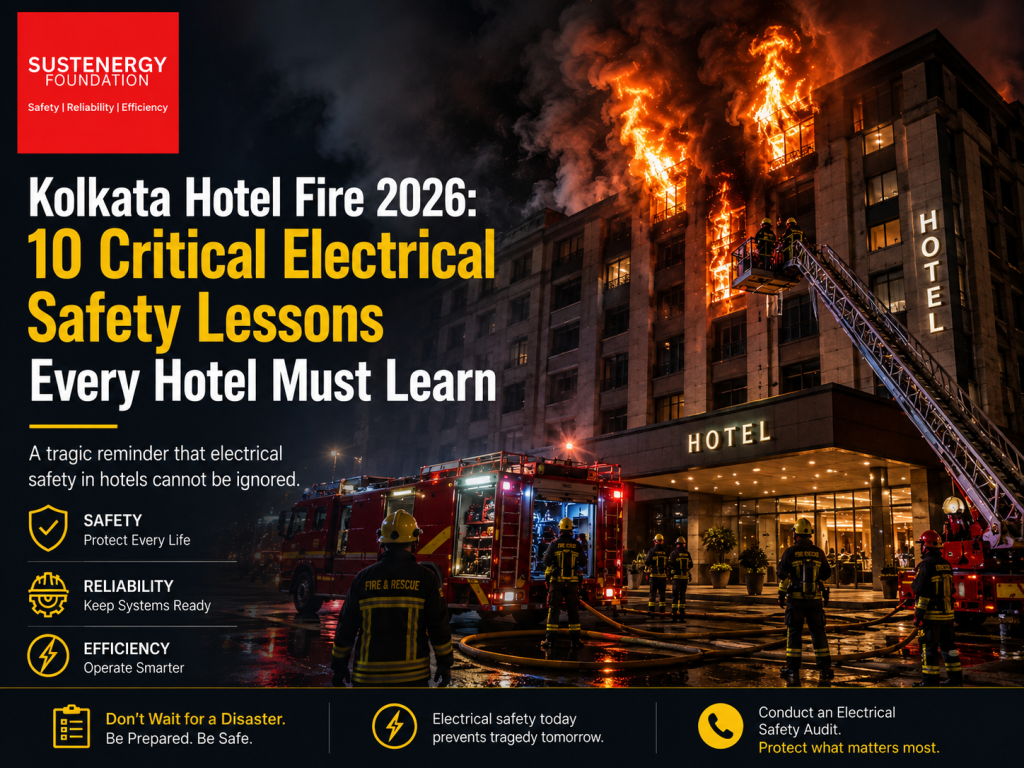
The Kolkata hotel fire on August 19, 2026, which reportedly claimed nine lives, has once again brought this issue into focus. Preliminary reports have pointed towards a possible electrical fault, while investigators examine the electrical connections and equipment involved.
Reports have also highlighted other serious concerns, including inadequate fire alarms, congested areas, blocked windows and difficult escape routes.
For hotel owners, Chief Engineers, Facility Managers and Maintenance Managers, there is an important lesson here:
An electrical fault may start a fire, but the hotel’s electrical design, maintenance practices, fire protection systems and emergency preparedness can determine how quickly that incident becomes a disaster.
This is why hotel electrical safety cannot be treated as just another maintenance checklist. It has to be part of the hotel’s overall fire and life-safety strategy.
Here are 10 critical electrical safety lessons every hotel should take seriously.
1. Don’t Treat Electrical Panels as “Out of Sight, Out of Mind”
Electrical panels are often located in rooms that guests never see. That does not make them any less important.
LT panels, distribution boards (DBs), MCCs and other electrical panels should be regularly inspected for:
- Loose electrical connections
- Overheating and hot spots
- Damaged insulation
- Corrosion
- Burn marks or discoloration
- Unauthorised modifications
- Overloaded circuits
- Improper cable termination
- Damaged breakers and components
One of the most effective ways to identify developing problems is electrical thermography or thermal scanning.
A loose connection may not look dangerous during a visual inspection, but it can generate excessive heat under load. That heat can progressively damage insulation and surrounding components and potentially become an ignition source.
Facility Team Tip
Schedule periodic thermal imaging of critical electrical panels under normal operating conditions.
Don’t simply file the thermography report.
If a hotspot is identified, investigate the cause, rectify it and verify the condition again.
SEO Keywords: hotel electrical panel maintenance, LT panel inspection, electrical thermography, hotel electrical maintenance, electrical fire prevention
2. Know How Much Electrical Load Your Hotel Is Actually Carrying
Hotels rarely operate at the same electrical load they had when the building was originally designed.
Over the years, new air-conditioning units, kitchen equipment, laundry machines, refrigerators, IT equipment, EV chargers, guest-room appliances and other electrical systems are added.
The result?
The hotel’s actual electrical demand may be significantly higher than the original design assumptions.
Facility teams should regularly compare:
- Approved electrical load
- Transformer capacity
- Generator capacity
- Cable ratings
- Breaker ratings
- Busbar capacity
- Maximum demand
- Actual peak electrical consumption
Repeated breaker tripping should never be considered normal.
Neither should unexplained increases in electricity consumption.
Facility Team Tip
Maintain an electrical load schedule and periodically compare the designed capacity with actual demand.
When a new major load is introduced, don’t simply connect it to the nearest available circuit.
Have the electrical system evaluated first.
SEO Keywords: hotel electrical load management, hotel power management, electrical load calculation, hotel transformer capacity, hotel electrical design
3. Never Bypass Electrical Protection Just to Stop a Breaker From Tripping
A circuit breaker that keeps tripping is not necessarily the problem.
It may be the warning system telling you that there is a problem somewhere in the circuit.
MCBs, MCCBs, RCCBs, RCBOs, overload protection and other protective devices exist to disconnect electrical supply when abnormal conditions occur.
Never:
- Replace a breaker with a higher rating without engineering justification
- Bypass an RCCB
- Disable protective devices
- Use makeshift electrical connections
- Continue operating a circuit with a known fault
A “nuisance trip” may actually be indicating overload, short circuit, earth leakage or equipment failure.
Facility Team Tip
Don’t silence the warning—find the reason for it.
Every recurring trip should trigger an investigation and documented corrective action.
SEO Keywords: electrical protection systems, MCB MCCB maintenance, RCCB testing, RCBO testing, hotel electrical safety systems
4. Make Earthing and Leakage Protection a Priority
Hotels contain electrical equipment across guest rooms, kitchens, bathrooms, laundry areas, plant rooms, offices and service areas.
Many of these locations also involve moisture, water and metal equipment.
That makes effective earthing and residual-current protection extremely important.
A proper hotel electrical safety programme should include:
- Earthing system inspection
- Earth resistance testing
- Equipment bonding verification
- RCCB testing
- RCBO testing
- Leakage-current monitoring where appropriate
- Documentation of test results
Facility Team Tip
Don’t treat earthing as a once-a-year paperwork exercise.
Maintain a documented earthing and electrical protection testing programme and investigate abnormal readings promptly.
SEO Keywords: hotel earthing system, earth resistance testing, RCCB testing, RCBO testing, electrical leakage protection
5. Give Kitchens and Laundry Areas Extra Attention
Commercial kitchens and hotel laundries are among the most demanding electrical environments in a property.
Think about what happens in these areas every day:
High electrical loads + heat + moisture + grease + motors + continuous operation.
That combination deserves special attention.
Regularly inspect:
- Power cables
- Industrial sockets
- Isolators
- Motors
- Heating equipment
- Control panels
- Exhaust systems
- Washing machines
- Dryers
- Ovens
- Dishwashers
- Electrical connections
Keep electrical equipment clean and protected from grease, water and combustible deposits.
Facility Team Tip
Include kitchen and laundry electrical equipment in your preventive electrical maintenance programme, rather than waiting for equipment failure.
SEO Keywords: commercial kitchen electrical safety, hotel laundry electrical safety, kitchen electrical inspection, hotel preventive maintenance, electrical fire prevention
6. Don’t Forget the Guest Rooms
Electrical safety inspections should not stop at the main electrical room.
Every guest room contains multiple electrical appliances and accessories:
- Air conditioners
- Water heaters
- Refrigerators
- Kettles
- Televisions
- Hair dryers
- Lighting
- Chargers
- Power sockets
Damaged sockets, loose plugs, overloaded extension boards and defective appliances can create unnecessary risks.
Hotels should also consider how guests use electrical equipment.
Guests may bring their own chargers, extension boards, adapters or appliances.
Facility Team Tip
Add electrical safety checks to routine guest-room preventive maintenance inspections.
Look for:
- Cracked sockets
- Loose switches
- Burn marks
- Discoloured plugs
- Overheated outlets
- Damaged cables
- Loose connections
Replace defective accessories immediately.
SEO Keywords: guest room electrical safety, hotel room electrical inspection, hotel electrical maintenance checklist, hotel preventive maintenance
7. Emergency Electrical Systems Must Work When They Are Needed Most
Imagine a fire occurring at 2 a.m.
The power goes out.
Smoke fills a corridor.
Guests are trying to find the exit.
This is exactly when emergency electrical systems need to perform—not during a scheduled demonstration.
Critical systems may include:
- Emergency lighting
- Fire alarm systems
- Fire pumps
- Smoke extraction systems
- Emergency communication systems
- Exit signage
- Generator systems
- UPS systems
- Battery backup systems
- Automatic changeover systems
Facility Team Tip
Test emergency electrical systems under realistic operating conditions.
Check:
Does the system start?
Does it transfer correctly?
Does the battery hold its required backup?
Does the emergency lighting actually illuminate the escape route?
Can the fire alarm operate when normal power is unavailable?
A system that works only during a demonstration is not enough.
SEO Keywords: hotel emergency power systems, emergency lighting testing, fire alarm electrical safety, hotel generator maintenance, hotel UPS maintenance
8. Control Temporary Wiring, Renovations and Unauthorised Electrical Modifications
Many electrical problems don’t originate in the original installation.
They appear later.
A renovation contractor adds a new circuit.
A temporary cable is installed.
An additional air conditioner is connected.
A power strip is used to supply multiple appliances.
A distribution board is modified without proper documentation.
Over time, these small changes can create a significant electrical safety risk.
Facility Team Tip
No electrical modification should happen without engineering review and authorisation.
Every renovation or new electrical load should be assessed for:
- Cable capacity
- Breaker capacity
- Load demand
- Earthing
- Protection
- Cable routing
- Fire stopping
- Accessibility
- Documentation
Contractors should not be permitted to modify critical hotel electrical systems without inspection and approval.
SEO Keywords: hotel electrical renovation safety, electrical contractor safety, temporary wiring safety, hotel electrical installation, electrical modification safety
9. Electrical Safety and Fire Safety Must Work Together
This may be one of the most important lessons for hotel facility teams.
Electrical safety and fire safety are not two separate programmes.
They are connected.
An electrical fault can create a fire.
A fire can damage electrical infrastructure.
Loss of electrical power can affect fire protection.
Smoke can affect evacuation.
Failure of emergency lighting can make escape routes difficult to navigate.
That’s why hotel facility teams should pay close attention to:
- Electrical rooms
- Cable shafts
- Electrical risers
- Cable trays
- Service areas
- Generator rooms
- Transformer areas
- UPS and battery rooms
- Fire alarm circuits
- Emergency lighting circuits
These areas should be kept accessible, properly maintained and free from combustible storage.
Fire detection, alarm, emergency lighting, evacuation systems and electrical maintenance should be planned and tested as an integrated life-safety system.
SEO Keywords: hotel fire safety, electrical fire safety, hotel life safety, hotel fire prevention, fire safety electrical systems
10. Conduct an Independent Hotel Electrical Safety Audit
Routine maintenance is essential.
But routine maintenance alone may not identify every systemic problem.
This is where an independent electrical safety audit can add significant value.
A comprehensive hotel electrical safety audit should consider:
Electrical Infrastructure
- Electrical load and capacity
- LT panels and distribution boards
- Transformers
- Generators
- Cables and cable terminations
- Breakers and protective devices
Electrical Protection
- Protection coordination
- MCB/MCCB condition
- RCCB/RCBO operation
- Overload protection
- Short-circuit protection
- Earthing and bonding
Condition Monitoring
- Electrical thermography
- Hotspot identification
- Cable condition
- Connection integrity
Critical Hotel Systems
- Kitchen electrical systems
- Laundry electrical systems
- Guest-room electrical installations
- HVAC electrical systems
- UPS and battery systems
- Emergency power systems
Fire & Life Safety
- Fire alarm systems
- Emergency lighting
- Fire pumps
- Smoke extraction
- Emergency power
- Critical life-safety circuits
Documentation & Compliance
- Electrical single-line diagrams
- Load schedules
- Test reports
- Maintenance records
- Statutory documentation
- Electrical safety procedures
An independent audit can help the hotel move from reactive maintenance to proactive risk management.
The Facility Team’s Golden Rule
Don’t wait for:
Smoke.
Burning smell.
Sparks.
A hot electrical panel.
Repeated breaker trips.
A failed appliance.
to tell you that something is wrong.
The real objective of hotel electrical maintenance is to identify the abnormal condition before it becomes an incident.
The Kolkata hotel fire is a painful reminder that electrical safety, fire safety and life safety are inseparable.
For every Hotel Chief Engineer, Facility Manager, Maintenance Manager and property owner, there is one question worth asking:
“If an electrical fault occurs tonight, are our systems, our people and our evacuation arrangements ready to protect every guest and employee?”
If the answer is not an immediate yes, there is work to do.
Because hotel electrical safety is not simply about meeting a checklist.
It is about making sure that everyone who enters the hotel can leave safely.
Hotel Electrical Safety Checklist: Where Should You Start?
If you manage electrical systems in a hotel, start with these five questions:
1. When was our last independent electrical safety audit?
2. Have all critical electrical panels been thermally scanned under operating load?
3. Do we know our actual peak electrical demand?
4. Have we tested our earthing, RCCBs/RCBOs and emergency power systems?
5. Can our emergency electrical and fire-safety systems operate reliably during a real power failure or fire emergency?
If you cannot confidently answer these questions, now is the right time to review your hotel’s electrical safety programme.
Build a Safer Hotel. Start With Electrical Safety.
