
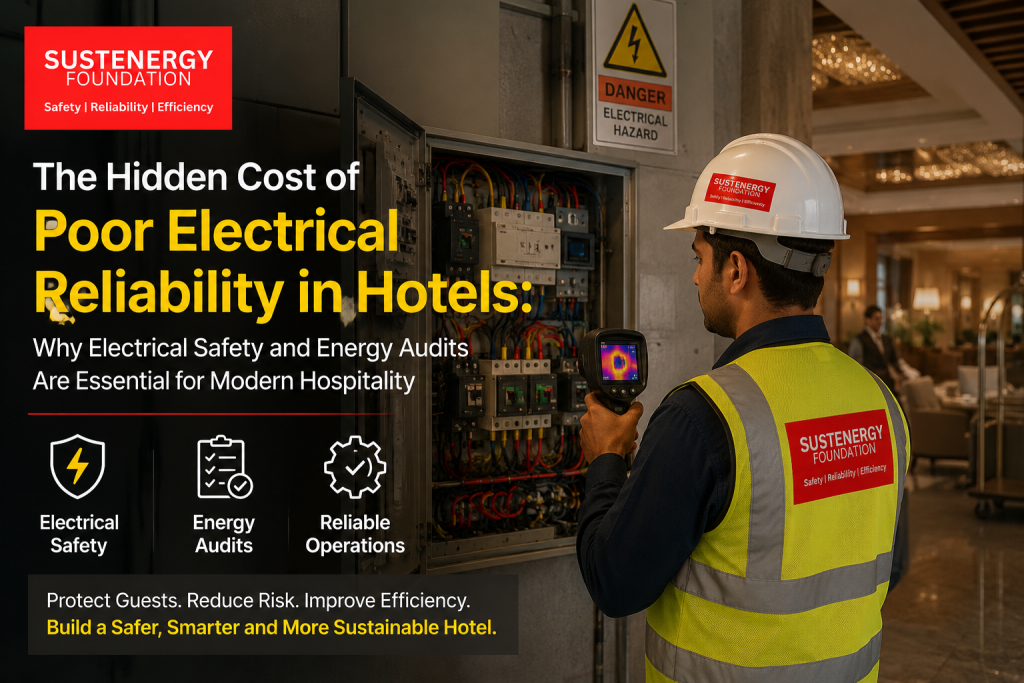
The Silent Risk Behind Luxury Hospitality
Modern hotels and resorts are built around comfort, convenience, and uninterrupted guest experience. Every guest expects smooth air conditioning, reliable elevators, uninterrupted lighting, stable Wi-Fi connectivity, efficient kitchen operations, and complete safety throughout their stay. However, behind the elegant interiors and luxurious hospitality experience, many hotels silently struggle with serious electrical reliability challenges that often remain unnoticed until a major failure occurs.
Across India, many hotels and resorts face recurring issues such as overloaded electrical circuits, voltage fluctuations, poor earthing systems, overheating electrical panels, DG failures, inefficient HVAC performance, and rising energy consumption. These issues not only increase operational expenses but also create significant safety risks, equipment failures, service interruptions, and guest dissatisfaction.
A professional hotel electrical safety audit helps identify these hidden risks before they turn into costly operational disruptions or dangerous fire incidents. Today, conducting an electrical safety audit for hotels is no longer optional — it has become a critical requirement for business continuity, guest safety, insurance compliance, and brand reputation.
Why Hotels Are More Vulnerable to Electrical Failures
Hotels operate continuously, often 24/7, with highly demanding electrical loads. HVAC systems, banquet halls, commercial kitchens, laundries, elevators, decorative lighting, pumps, refrigeration systems, and IT infrastructure all consume significant power every day. In many cases, electrical systems installed years ago are now operating beyond their intended capacity due to property expansions and increasing energy demands.
Unfortunately, many maintenance teams become accustomed to frequent electrical failures and begin treating them as part of routine operations. Technicians often spend their time attending emergency complaints instead of focusing on preventive maintenance and long-term reliability improvements. This reactive approach gradually increases operational stress, staff burnout, and the likelihood of unexpected shutdowns.
A detailed hospitality electrical safety audit can help engineering teams shift from reactive maintenance practices to proactive reliability management. Through systematic inspections, testing, and analysis, hotels can significantly reduce downtime, improve safety standards, and enhance overall guest satisfaction.
The Growing Importance of Hotel Energy Audits
Energy consumption has become one of the largest operational expenses in the hospitality sector. Cooling systems, lighting, hot water generation, kitchen equipment, laundry operations, and ventilation systems account for a major portion of electricity usage in hotels and resorts.
Many properties unknowingly waste substantial energy because of outdated electrical infrastructure, poor power factor, unbalanced electrical loads, inefficient motors, improper chiller operations, and lack of monitoring systems. This is where professional hotel energy audit services play a vital role.
An advanced energy audit for resorts and hotels helps identify areas where electricity is being wasted and provides practical recommendations for energy optimization. Hotels that invest in energy efficiency improvements not only reduce electricity bills but also improve sustainability performance and strengthen their ESG initiatives.
Today’s guests increasingly prefer environmentally responsible hotels that actively demonstrate sustainability practices. Implementing energy saving solutions for hotels and resorts not only supports green initiatives but also improves profitability and long-term operational efficiency.
Electrical Safety and Fire Prevention in Hotels
Electrical safety remains one of the most important aspects of hotel infrastructure management. Hotels contain multiple high-risk areas such as electrical rooms, kitchens, laundry sections, UPS rooms, DG rooms, HVAC systems, and banquet lighting systems. Poor maintenance in any of these areas can lead to overheating, insulation failure, short circuits, or even catastrophic electrical fires.
Professional hotel electrical inspection services help identify hidden defects including loose cable terminations, overloaded panels, damaged insulation, improper earthing, and thermal abnormalities. In many cases, these defects remain undetected until they result in serious failures.
A comprehensive fire safety electrical audit for hotel buildings includes thermography inspections, RCCB testing, earthing verification, lightning protection assessment, and load analysis to ensure complete electrical safety compliance.
Conducting regular hotel maintenance electrical safety inspections significantly reduces fire risks while improving the reliability of critical systems that directly affect guest comfort and safety.
Understanding the Electrical Audit Process for Hotels
Many hotel owners and engineering managers often ask how to conduct electrical audit in hotels effectively. A professional audit typically begins with a detailed inspection of the complete electrical distribution system, including transformers, LT panels, DG systems, UPS systems, earthing arrangements, HVAC infrastructure, and energy consumption patterns.
The process usually involves:
- Electrical load analysis
- Thermography inspections
- Earthing and insulation testing
- Power quality analysis
- Harmonic assessment
- RCCB functionality testing
- Energy consumption analysis
- Risk identification and corrective recommendations
An effective electrical safety audit checklist for hotels ensures that every critical component is evaluated systematically to identify both safety hazards and energy inefficiencies.
Compliance and Risk Assessment for Hotels in India
Hotels today must comply with increasingly strict safety standards and regulatory requirements. Failure to maintain safe electrical infrastructure can lead to penalties, insurance issues, operational shutdowns, and reputational damage.
Professional hotel electrical risk assessment services help hotels identify vulnerabilities before they become major liabilities. These assessments are especially important for older properties where electrical systems may not meet current standards.
Conducting periodic audits also supports electrical safety compliance for hotels India, helping hotel operators align with statutory requirements, fire safety regulations, insurance expectations, and sustainability goals.
Why Choosing the Right Audit Partner Matters
Selecting an experienced electrical audit company for hotels is essential for achieving meaningful improvements in safety, reliability, and energy efficiency. Hotels require specialized expertise because hospitality facilities have complex electrical loads and continuous operational requirements that differ significantly from industrial or commercial buildings.
The best electrical audit company for hotels in India will not only identify safety issues but also provide practical, cost-effective solutions that improve operational reliability, reduce maintenance costs, and enhance guest experience.
Modern hospitality businesses can no longer afford to ignore the impact of electrical failures, unsafe infrastructure, and energy waste. Hotels that invest in proactive electrical safety and energy management today are building stronger, safer, more sustainable brands for the future.
Building a Safer and More Sustainable Hospitality Industry
The future of hospitality depends heavily on safe, reliable, and energy-efficient infrastructure. Hotels and resorts that prioritize preventive maintenance, energy optimization, and electrical safety are better positioned to protect guests, reduce operational stress, improve profitability, and maintain strong brand reputation.
A professional resort electrical safety audit or hotel electrical inspection is not just a technical exercise — it is a strategic investment in operational continuity, guest trust, and long-term sustainability.
By adopting proactive maintenance practices and investing in regular audits, hotels can create safer environments, reduce energy waste, improve equipment life, and deliver the uninterrupted hospitality experience that modern guests expect.
