
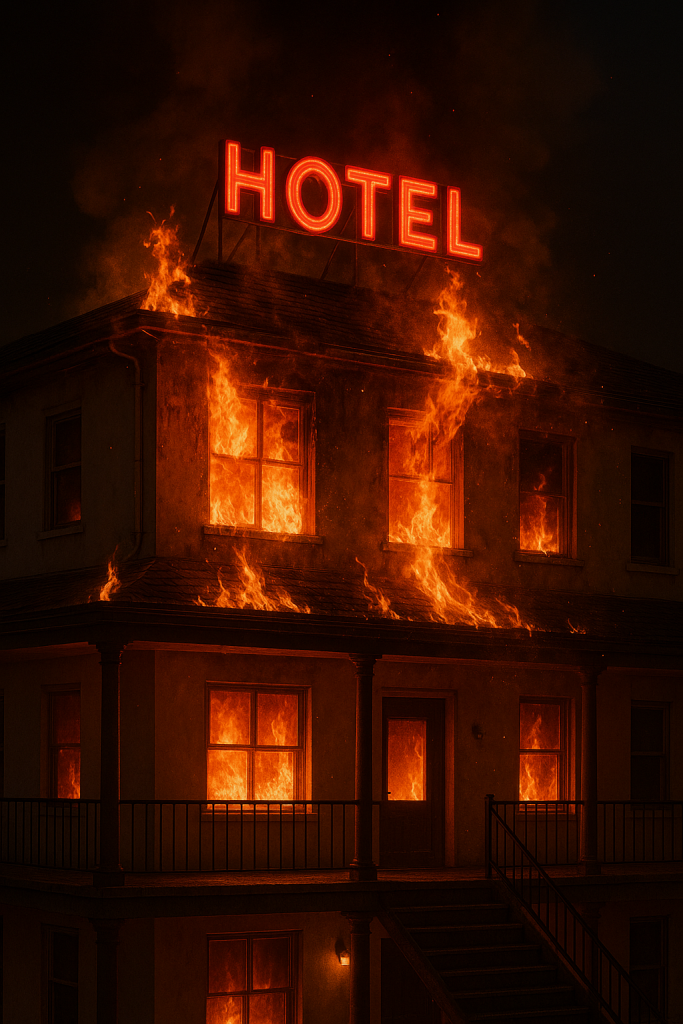
A fire occurred on the afternoon of a weekday in November 2025 in the kitchen of a two‑storey hotel in Kurla West, Mumbai. The flames originated from the ground‑floor kitchen and involved wiring, cooking equipment, utensils, furniture, and the chimney area. Fire teams managed to contain the blaze within 90 minutes. Five personnel were evacuated and treated for smoke exposure; no one died. The hotel incurred partial loss of kitchen equipment and raw materials, while smoke spread and caused disruption in the guest areas.
This incident-wide reporting across local media-is a textbook example of how a localized electrical fault can escalate into a business-disrupting and potentially life-threatening event. Masking the establishment’s name for privacy and sensitivity, this post analyzes what likely went wrong, the broader lessons for hotels and other commercial kitchens, and how systematic electrical safety audits and maintenance would significantly reduce recurrence risk.
What was most likely to cause the fire?
Based on the facts reported-the fire started in the kitchen and the suspected cause was electrical short circuit-several common failure modes could have been involved:
- Overloaded circuits or undersized wiring serving high-power kitchen equipment, such as stoves, deep fryers, or dough mixers.
- Poorly maintained wiring insulation and loose terminations in switchboards or behind equipment can create arcing and short circuits.
- Exposure of wiring to grease, heat, and steam common in kitchens, which accelerates insulation degradation.
- Lack of segregation for dedicated circuits to heavy appliances results in nuisance heating and faults.
- Poor or missing protection devices (RCCBs/RCDs, miniature circuit breakers), or protection which is set incorrectly to fail to quickly isolate a fault.
- Accumulated combustible materials of cloths, cardboard, and stored raw materials near the electrical fittings and chimney exhausts, enabling a rapid fire spread.
- Lack of regular thermographic checks for the detection of hot spots on panels and connections.
A short circuit itself is often the trigger, but it’s the combination of degraded infrastructure, operational practices and lack of defensive safeguards that determines whether that trigger becomes a minor fault or a full‑scale fire.
Immediate and downstream effects
Even when confined without casualties, kitchen fires impose several costs:
- Operational downtime and loss of revenue while repairs, cleaning, and regulatory checks are completed.
- Replacement cost for damaged kitchen equipment, electrical wiring, and fittings.
- Smoke damage and contamination of guest areas requiring professional cleaning with possible temporary closure.
- Reputation impact due to adverse media exposure and guest inconvenience.
- Regulatory scrutiny, possible penalties in case of detected safety lapses.
- Human cost in stress and trauma for staff and guests, even where physical injuries are avoided.
This has been replicated in the Kurla incident, where rapid intervention by fire brigade operations resulted in limited injuries and larger loss. At the same time, however, recovery and reputational repair can be prolonged and expensive.
Why hotels are particularly vulnerable
Commercial kitchens are high‑risk electrical environments because:
- Heavy, continuous loads: ovens, fryers, grinders and refrigeration place a sustained high current demand on circuits.
- Harsh operating conditions: heat, steam, grease and frequent cleaning accelerate wear and create conductive contamination.
- Complex load profiles and peak demand-meaning that when several appliances operate simultaneously, overloads may occur if the distribution is not designed according to peak diversity.
- Frequent ad hoc modifications may result in unsafe conditions, with additions of equipment or quick fixes by contractors not always fully integrated into the electrical design.
- Close coupling of electrical and combustible elements: Combustible packaging, textiles, and food waste are often stored alongside electrical utilities.
These make the rigorous electrical design, protective coordination, and maintenance non-negotiable.
How electrical safety audits could prevent incidents such as this
An electrical safety audit is a structured, independent review looking at installation integrity, protective device performance, operational practices, and compliance with standards. For hotels-and particularly kitchens-an audit generally encompasses:
- Visual inspection of switchboards, distribution boxes, wiring routes, and enclosures.
- Instrumented testing: earth resistance, insulation resistance, earth fault loop impedance and RCCB/RCD performance.
- Thermographic surveys of panels and critical connections to detect hot spots before they lead to failure.
- Perform load analysis to confirm that circuits and cables are sized for actual demand and diversity.
- Verification of protective device coordination and settings so that a fault in one circuit does not cascade into others.
- Physical environment inspection: proximity of combustibles, chimney and exhaust integrity, ingress protection of enclosures, and cable protection against grease and heat.
- Review of maintenance records, spares availability, and emergency response procedures.
- Prioritised remedial road map with cost estimates and timelines.
A comprehensive electrical safety audit converts reactive firefighting into preventive action by uncovering hidden risks and providing practical, staged solutions matched to budget and operational constraints.
Operational and design measures to reduce risk
Beyond audits, hotels should implement the following practical measures:
- Dedicated circuits and appropriately sized cabling for heavy appliances; no sharing of circuits for high power equipment.
- IP‑rated enclosures and conduit protection in kitchen areas to protect wiring from grease, steam and cleaning water.
- Regular thermography and electrical condition monitoring is performed on panels and exposed terminations.
- Planned preventive maintenance and a CMMS-supported register for tests, repairs, and replacements.
- Correctly rated and regularly tested RCD/RCCBs and overcurrent protection with selective coordination.
- Good housekeeping: store combustible materials away from electrical equipment and chimney exhausts.
- Training of kitchen and maintenance staff on safe operation, hazards of overloading, and immediate actions when smell of burning or smoke is detected.
- Rapid fault reporting channels and a tested emergency response and evacuation plan tailored to guest areas and service zones.
These combined measures reduce both the probability of ignition and the potential severity of any electrical fault that does occur.
Third‑party auditors’ role and the selection of a partner
It is very important to select a competent partner to perform an electrical safety audit. Look for firms demonstrating:
- Accredited testing capability, calibrated instruments, and thermography certification.
- Experience in both the hospitality and industrial sectors, with case studies highlighting measurable outcomes.
- Clear reporting with prioritization and realistic remediation timelines and cost estimates.
- Post-audit support: verification testing after repairs and training for in-house personnel.
- Reputation amongst peers: A number of hotels engage one of the best electrical safety audit firms in India for complex sites.
A targeted search should focus on the top electrical safety audit firms in India and the best electrical safety audits in India, prioritizing firms with technical depth in addition to experience with delivery operations. Employing established auditors means actionable findings and follow-through, not just a checklist.
Regulatory and insurance considerations
Regular electrical safety audits support adherence to building codes, local fire regulations, and insurer requirements. Documentation of audits and remedial action often reduces insurer disputes in the event of claims and may have a positive effect on premiums. For hotels operating under brand standards or accreditation schemes, documented periodic audits are often mandatory.
- Practical checklist for hotel managers (quick actions)
- Commission a complete electrical safety audit, focusing on kitchen and back‑of‑house areas.
- Perform at least two thermography scans of panels per year.
- Make sure all heavy appliances are on dedicated, properly terminated circuits.
Enforce safe storage rules to keep combustibles away from electrical and chimney areas. Ensure asset registers and test records are up-to-date within the CMMS. Train staff in immediate actions on detecting electrical faults and in basic evacuation procedures. Contractually require maintenance vendors to follow safe installation standards and provide test certificates.
Quick Summary
The Kurla kitchen fire serves as a grim reminder that an electrical short circuit — usually a single point failure — can cause disproportionate harm in the exacting environment of a commercial kitchen. Fortunately, these are for the most part avoidable. Periodic electrical safety audits by qualified firms — preferably among the best electrical safety audit firms in India — backed by disciplined maintenance, staff training, and good housekeeping, provide multiple layers of defense against fire and electrocution.
—————————————————————————————————————————
Note: All blogs are prepared by Sustenergy Foundation based on our research in the respective sector/industry and on factual audits conducted by us, drawing from our expertise in the field through electrical safety audits, energy audits, or other related studies. These blogs are published with the purpose of creating awareness and sharing technical expertise with employees at various levels — from laypersons to experts — and are prepared in accordance with the blog policy of Sustenergy Foundation.
Prepared by Sreelakshmi. S Head – Engineering
Reviewed and approved by Jayakumar Nair, Managing Director
